
EPD Lighting 2026: OEM/ODM Guide for Extreme Environments
For lighting importers, wholesalers, project engineers, and lighting designers serving the European market, 2026 marks a structural shift. As of 2026, EPD-certified lighting is mandatory for EU construction products under the revised CPR. The verification process takes 8-12 weeks and costs €8,000-15,000 per product family.
France's RE2020 regulation explicitly requires EPD-verified data for lighting in commercial and residential buildings. California's Buy Clean Act and the GSA's federal procurement standards increasingly list EPDs as required documentation. The question is no longer whether you need an Environmental Product Declaration — it's how fast you can get one, and whether your supplier can back it up with the technical certifications that the most demanding projects require.
According to Eco Platform data, over 14,000 construction product EPDs were registered globally in 2024, reflecting a 35% year-over-year increase as regulations tighten. Complementing this, World Green Building Council (WorldGBC) guidelines indicates that embodied carbon transparency has risen to a top-three procurement priority for commercial developments. Furthermore, the European Commission’s Circular Economy Action Plan forecasts that undocumented construction components will face severe border compliance and regulatory friction by late 2026. If you're a lighting importer without third-party verified environmental data, you're being quietly excluded from some of the best projects on the market.
At a Glance: Core Takeaways
Mandatory Disclosure: The 2026 EU CPR makes EPD disclosure mandatory for construction products, including lighting.
Timeline & ROI: EPD verification takes 8-12 weeks; typical investment is recouped within 12-18 months through tender wins.
Carbon Reduction: ANOVA's modular design reduces replacement cycles and cuts lifecycle maintenance carbon emissions by up to 60%.
1. What Is an Environmental Product Declaration?
1.1 ISO 14025 and EN 15804: The Framework
An Environmental Product Declaration is a third-party verified, standardized document that quantifies a product's environmental performance across its entire lifecycle. It is governed by ISO 14025 (Type III environmental declarations) and EN 15804 (sustainability of construction works), and is built on a rigorous Life Cycle Assessment (LCA) conducted in accordance with ISO 14040 and ISO 14044.
For lighting products specifically, EPDs quantify:
Embodied carbon — raw material extraction, manufacturing, and transport emissions
Operational energy — energy consumption during the use phase (typically 70-90% of a luminaire's total lifecycle impact)
End-of-life — recyclability, disassembly potential, and waste processing
What separates EPDs from self-declared eco-labels is the Product Category Rule (PCR) framework. PCRs define exactly what must be measured and how — enabling direct product-to-product comparison. Unlike vague green claims, EPDs turn sustainability from a marketing narrative into auditable, comparable data.
1.2 EPD vs Eco-Label vs Self-Declaration
Navigating environmental claims can be confusing. While Self-Declarations (Type II) lack third-party oversight, and Eco-Labels (Type I) merely offer a pass/fail certification based on specific criteria, an EPD (Type III) provides a comprehensive, standardized, and third-party verified lifecycle assessment. Here is a breakdown of how they compare:
Dimension | EPD (Type III) | Eco-Label (Type I) | Self-Declaration (Type II) |
Standard | ISO 14025 + EN 15804 | ISO 14024 | ISO 14021 |
Third-party verification | Mandatory | Mandatory | None |
Lifecycle scope | Full (cradle-to-grave) | Selected criteria | Varies |
Product comparison | Yes (same PCR) | Pass/fail only | Not comparable |
Market acceptance | EU CPR, LEED, BREEAM, DGNB | Limited sector-specific | Not accepted for tenders |
Typical cost | $5,000-15,000 per product family | $2,000-8,000 | $0 |
Typical timeline | 3-6 months | 2-4 months | Immediate |
Regulatory weight | High (CPR + RE2020) | Medium | None |
2. The 2026 Regulatory Landscape
2.1 Europe: CPR, RE2020, and the CSRD
EU Construction Products Regulation (CPR): The revised CPR now treats environmental data as a mandatory disclosure for construction products across all 27 member states. In practice, this means an EPD is becoming a basic market-access requirement — not a differentiator.
France RE2020: Goes further than the CPR: it explicitly mandates EPD-verified data for lighting products used in commercial and residential buildings. Manufacturers and importers without EPDs are effectively locked out of the French specification market.
Corporate Sustainability Reporting Directive (CSRD): From 2025 onward, companies covered by the CSRD must report Scope 3 emissions — which includes purchased products. EPDs provide the auditable, granular data that downstream customers need for their own CSRD filings. A lighting importer who can supply EPD data immediately becomes more valuable to customers with reporting obligations.
2.2 North America: Buy Clean, GSA, and LEED v4.1
California Buy Clean Act — Sets maximum acceptable global warming potential (GWP) limits for specified materials in public projects. EPDs are the accepted documentation format.
GSA Federal Procurement — The U.S. General Services Administration now lists EPDs as required or strongly preferred documentation for federally funded construction.
LEED v4.1 — Products with published EPDs earn points in the Materials & Resources category (Option 1: EPD, up to 2 points). For a project targeting LEED Gold or Platinum, those two points can be decisive.
2.3 Other Jurisdictions
Beyond North America and the EU, environmental transparency is becoming a global baseline, with EPD requirements increasingly integrated into regional green building frameworks and public procurement. Emerging markets in the Middle East (such as the UAE's Estidama and Saudi Arabia's Mostadam) and Southeast Asia (Singapore's Green Mark) are rapidly adopting identical life-cycle reporting standards.
Region | Regulation / Standard | EPD Requirement |
United Kingdom | BREEAM (Mat 01, Mat 02) | EPDs earn credits |
Germany | DGNB (ENV 1.1) | LCA data required |
Netherlands | Milieu Prestatie Gebouwen (MPG) | Mandatory EPD for buildings |
Sweden / Norway | Nordic Swan + BREEAM-SE | EPD increasingly required |
Australia / New Zealand | Green Star + ISC | EPDs earn innovation points |
Singapore | Green Mark 2021 | EPDs contribute to material scoring |
3. How EPDs Win Projects: Green Building and ESG
3.1 Green Building Certification Credits
Certification | Relevant Credit | EPD Contribution |
LEED v4.1 | MRc2: EPD | 1 pt (1 product) / 2 pts (20+ products, 5+ mfrs) |
BREEAM | Mat 01: Life Cycle Impacts | Up to 6 credits for EPD-backed specs |
DGNB | ENV 1.1: Building LCA | EPD data feeds directly into building-level LCA |
WELL v2 | Materials (X06) | Contributes to material transparency requirements |
3.2 ESG and Investor-Grade Data
For corporate sustainability reporting under GRI, SASB, or the EU's CSRD, EPDs deliver auditable Scope 3 metrics that withstand auditor scrutiny. Institutional investors and ESG rating agencies increasingly factor supply-chain environmental data into investment decisions. For lighting importers, this means EPD-ready product lines are not just a compliance tool — they are a commercial asset that your downstream customers can use in their own reporting.
4. The ANOVA Approach: Modular Architecture and Verifiable Performance
At ANOVA Lighting, EPD principles — transparency, lifecycle thinking, and data-driven environmental decisions — are built directly into product design.
4.1 Modular Architecture: Streamlining Maintenance
Traditional luminaires are monolithic. When an LED module or driver fails, the entire fixture is typically discarded — a linear 'take-make-dispose' model that multiplies embodied carbon over the building's lifetime.
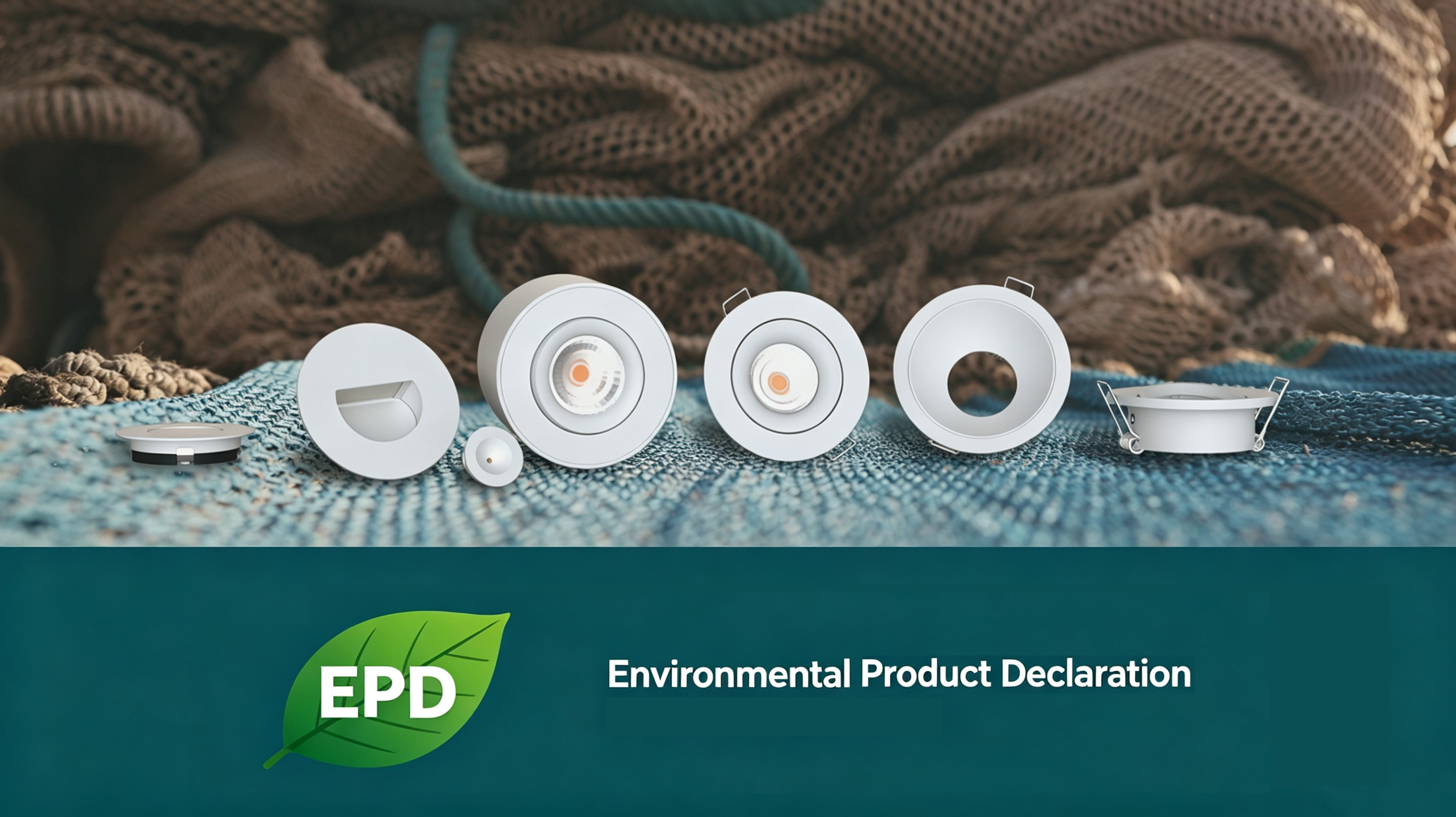
ANOVA's modular system reverses this. Plug-and-play LED modules, drivers, and optical accessories enable field-level component replacement without removing the fixture housing. By replacing only the necessary components, this approach reduces maintenance carbon by up to 40% over the fixture's lifecycle. The main housing, frame, and thermal management components remain in service — reducing material consumption and installation waste.
Crucially, this shared modular component framework acts as an environmental cost stabilizer. While traditional sustainable manufacturing requires thousands of identical units to absorb LCA modeling costs, ANOVA's architecture allows us to support project-specific custom runs without restarting environmental assessments from scratch.
4.2 Key Technical Specifications By ANOVA Technical Team
Parameter | Specification | Standard Reference |
Luminous efficacy | Up to 150 lm/W | LM-80 (IES TM-21 projection) |
Color rendering | CRI >90 | CIE 13.3 |
Color consistency | SDCM <3 (3-step MacAdam) | CIE 1931 |
Unified glare rating | UGR <19 | EN 12464-1 |
Color temperature | 3CCT selectable: 2700K / 3000K / 4000K | ANSI C78.377 |
Control protocol | DALI-2 (IEC 62386-101/102/207) | IEC 62386 |
Driver efficiency | >90%, 24V / 48V DC options | EN 61347 |
Rated service life | L80/B10 >50,000 hours | IES TM-21 |
Sustainability materials | RCS-2 certified ocean-bound plastic (OBP) housing options | RCS-2 (Textile Exchange) |
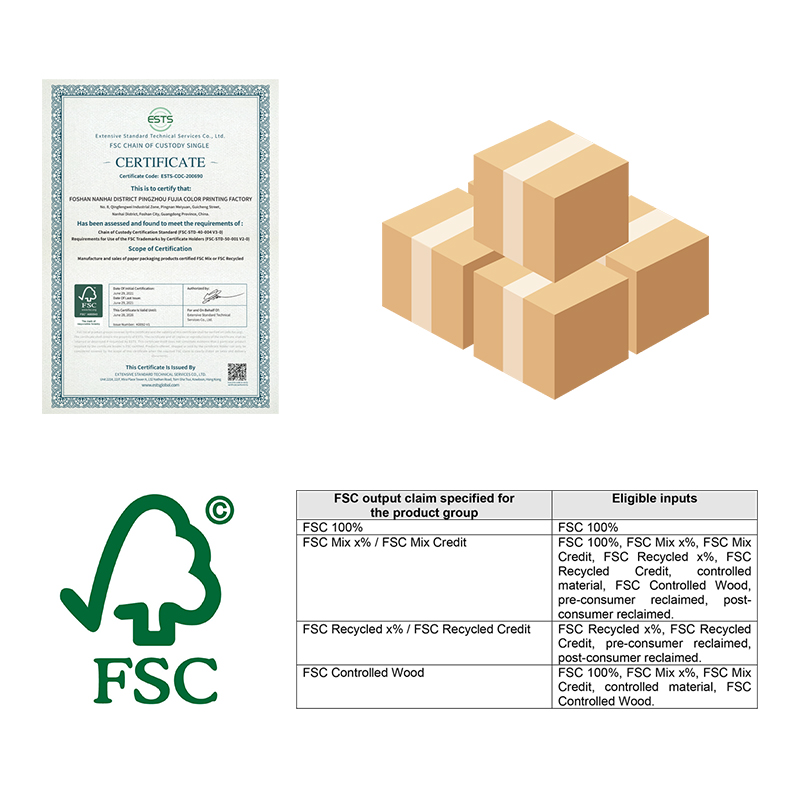
Packaging | FSC-certified, plastic-bag-free | FSC-STD-40-004 |
4.3 Inventory and Supply Chain Impact
For importers and wholesalers, modular design enables more SKU coverage with fewer stocked variants. 3CCT selectable modules (2700K / 3000K / 4000K in a single unit) reduce the number of line items per order. For contractors, front-access field replacement reduces installation labor and construction waste. The result: lower logistics emissions, simplified procurement, and a product line that contributes to your customers' Scope 3 reduction targets.
(Learn more about our Recycled Ocean Plastic Lighting and 24V DC Centralized Lighting System).
5. EPDs for Demanding Applications: When Standard Specifications Aren't Enough
Not all lighting projects face the same conditions. For installations in high-salinity coastal environments, high-humidity underground facilities, or temperature-extreme outdoor applications, EPD data must be evaluated alongside the technical certifications that determine actual service life.
5.1 Beyond Carbon: The Complete Compliance Picture
An EPD tells you the environmental cost of a fixture under standard conditions. But for locations where fixtures face accelerated degradation — salt-laden air, continuous moisture exposure, wide temperature swings — you need to verify that the fixture will actually deliver its design service life. A fixture that fails prematurely doubles or triples its effective embodied carbon per year of service.
Certification / Standard | What It Verifies | Why It Matters Alongside an EPD |
IP68 (IEC 60529) | Continuous submersion protection | Preserves EPD's assumed service life in permanently wet environments |
IP65 (IEC 60529) | Dust-tight + water jet resistance | Required for exterior and washdown-area installations |
MED 2014/90/EU | EU Marine Equipment Directive | Mandatory for EU-flagged shipboard installations; signals manufacturing quality beyond CE |
Salt spray test (ISO 9227) | Corrosion resistance in saline atmospheres | Validates durability in coastal/offshore environments |
DALI-2 (IEC 62386) | Interoperable digital dimming and control | Zone-based dimming reduces operational energy, improving use-phase EPD figures |
24V / 48V DC architecture | Low-voltage safety and efficiency | Eliminates per-fixture AC-DC conversion losses; compatible with renewables |
Wide temp range (IEC 60068-2) | Reliability -20C to +50C | Validates performance in unconditioned spaces and outdoor applications |
5.2 The Hidden Cost of Cutting Corners
Consider two downlights, each with a published EPD showing an embodied carbon of 8.2 kg CO2e:
Fixture A: Standard die-cast aluminum housing. CE marked only. Installed in a coastal parking structure. Fails after 4 years due to salt corrosion.
Fixture B: Corrosion-resistant housing, salt-spray tested to ISO 9227 (480 hours). IP65 rated. Installed in the same location. Operational at year 10.
Fixture A's effective annual embodied carbon: 2.05 kg CO2e/year. Fixture B's effective annual embodied carbon: 0.82 kg CO2e/year.
The EPD numbers were identical — but the real-world carbon performance was 2.5x worse for the fixture not designed for its environment. In confined installations — such as parking structures, coastal facilities, or high-humidity enclosed installations — front-access replacement eliminates scaffolding and ceiling panel removal, drastically mitigating ongoing maintenance carbon footprints. For instance, in a recent European luxury hospitality project, specifying corrosion-resistant modular fixtures reduced anticipated replacement cycles by 60%, drastically cutting lifecycle carbon.
When evaluating EPD data, the question to ask is: Does the manufacturer certify for the conditions this fixture will actually face, or only for ideal laboratory conditions?
6. Your EPD Roadmap: Timeline, Cost, and Process
6.1 The EPD Development Process
Plain Text Phase 1: LCA Data Collection (2-4 weeks) -> Gather raw material data (BOM, weights, origins) -> Document manufacturing energy consumption -> Map transport distances and modes -> Define product lifetime and end-of-life scenarios
Phase 2: LCA Modeling (2-3 weeks) -> Build LCA model per ISO 14040/14044 -> Apply the relevant PCR for lighting products -> Run sensitivity analysis on key parameters
Phase 3: EPD Verification (2-4 weeks) -> Submit to an accredited third-party verifier -> Address verification queries and data gaps -> Receive verified EPD document
Phase 4: Publication and Maintenance (ongoing) -> Register EPD with a program operator (e.g., EPD International, IBU) -> Publish on operator database (validity: 5 years) -> Update when product composition or manufacturing changes -> Renew after 5 years (or earlier if PCR is updated) |
6.2 Cost and Timeline Summary
Product Scope | Typical Timeline | Estimated Cost (USD) | Best For |
Single product | 3-4 months | $5,000-8,000 | Flagship product line |
Product family (same PCR) | 4-5 months | $8,000-12,000 | Modular product range |
Multiple product families | 5-6 months | $12,000-20,000+ | Full portfolio coverage |
ROI horizon: Most suppliers report that the investment is recouped within 12-18 months through: preferred status in tender evaluations (EPD = automatic qualification for many projects), reduced need for per-project environmental documentation (one EPD covers all tenders), and higher conversion rates with architecture firms and sustainability consultants.
7. One-Stop OEM/ODM: From Concept to Container
7.1 Customizing Sustainable Fixtures: Your Partner for Lighting OEM EPD Solutions
As global projects demand highly customized configurations for high-specification commercial and hospitality spaces, standard off-the-shelf catalog products often fall short. ANOVA serves as your comprehensive partner for lighting OEM EPD solutions. We bridge the gap between creative design and stringent environmental compliance. Our engineering team manages the complete lifecycle flow—transforming raw concepts or photometric requirements into engineering drawings, managing the technical Life Cycle Assessment (LCA) compliance parameters, and delivering fully certified fixtures optimized for green building tenders.
7.2 Rapid Prototyping and Flexible Production as a Small Batch Lighting Supplier
For commercial lighting importers, large inventory commitments represent a major financial risk, especially when navigating shifting environmental legislations. ANOVA eliminates this barrier by operating as a highly flexible small batch lighting supplier.
Rapid Prototyping: We deliver working technical and aesthetic product samples within 2 to 4 weeks, accelerating your client approval timelines.
Flexible Low-MOQ Manufacturing: Our production lines are optimized for flexible, low Minimum Order Quantity (MOQ) runs, allowing us to seamlessly support customized project demands. By relying on our modular architecture component ecosystem, we minimize warehouse SKU accumulation while maintaining the ability to tailor raw materials and housings to specific project requirements. Exact project-specific MOQs vary depending on the depth of customization; however, our shared baseline framework ensures that smaller batches remain financially viable and fully EPD-compliant.
8. Choosing a Supplier: What to Look For
When evaluating lighting suppliers for EPD-ready product lines, prioritize:
1. Existing certification package — Does the supplier already hold MED, DALI-2, and CE certification? A supplier with an established compliance track record will navigate EPD verification more efficiently than one starting from scratch.
2. Modular architecture — Can individual components be replaced without full fixture disposal? Modular design reduces the environmental cost of maintenance and directly improves lifecycle assessment outcomes.
3. Material traceability — For products claiming recycled content (such as RCS-2 certified ocean-bound plastic), can the supplier provide transaction certificates tracing material from source to finished product?
4. Testing infrastructure — Does the supplier maintain in-house LM-80 testing, IP ingress protection testing, and salt-spray corrosion testing? In-house testing accelerates data collection for EPD development and future updates.
5. Documentation availability — Can the supplier provide certification documents, test reports, and compliance declarations in downloadable formats — ready for inclusion in your tender submissions?
Add EPD-Verified Lighting to Your Portfolio
Trusted by 50+ European importers, holding 200+ MED/DALI-2/CE certifications.
EPD verification takes 8-12 weeks. Project bidding in H2 2026 should initiate now. Send us your project requirements — fixture type, target certifications, and installation environment. We'll prepare a pre-compliance assessment covering applicable EPD product category rules for your product range, certification timelines, estimated costs, and a full engineering documentation package for your tender submissions.
[Send Project Requirements → Receive a Pre-Compliance Assessment Report Within 48 Hours]
[Download OEM/ODM Capability Deck]
FAQ: EPD Lighting Requirements
Q: How long does an EPD verification process take for lighting products?
A: The entire EPD process, including Life Cycle Assessment (LCA) data collection, modeling, and third-party verification, typically takes 8 to 12 weeks from start to finish.
Q: Are EPDs mandatory for lighting in Europe?
A: Yes, starting in 2026, the revised EU Construction Products Regulation (CPR) makes EPD-verified data a mandatory disclosure for construction products, including lighting fixtures. France's RE2020 also mandates this data.
Q: How much does an EPD cost for a lighting product?
A: Depending on the scope of the assessment, an EPD typically costs between €8,000 and €15,000 per product family.
Q: How does a modular lighting design affect EPD results?
A: Modular designs allow for the replacement of individual components (like LEDs or drivers) without disposing of the entire fixture housing. This "plug-and-play" capability reduces the maintenance carbon footprint by up to 40% over the product's lifecycle.
Q: Can ANOVA provide OEM EPD solutions?
A: Yes, ANOVA is a lighting supplier capable of full OEM/ODM EPD solutions, including compliance mapping, rapid prototyping in 2-4 weeks, and delivering certified end-products tailored to your tender.